

She looked fragile. Her voice never was. She named the invasion—and Rwandan President Paul Kagame’s denials trembled.
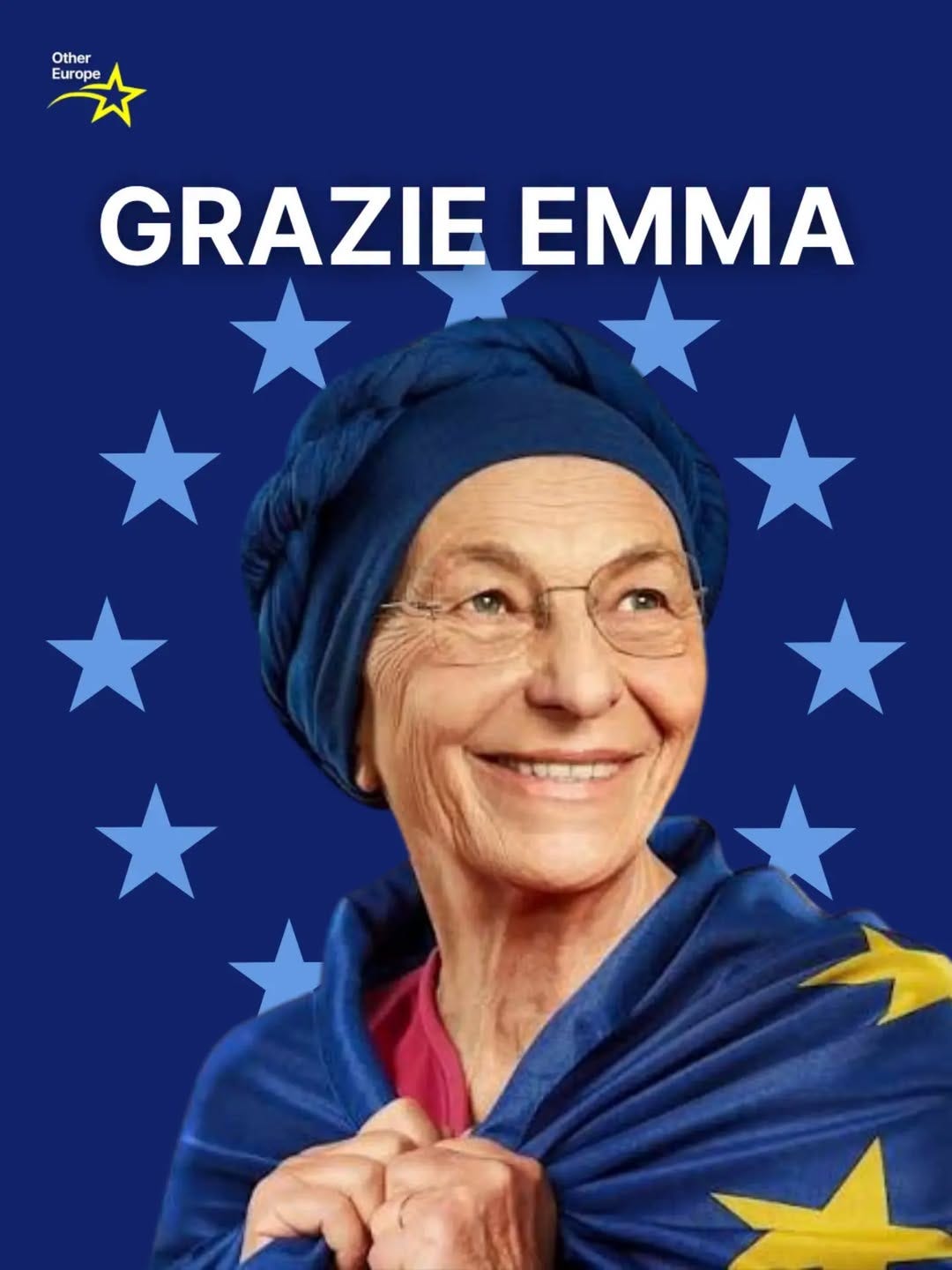
Emma Bonino died in Rome on 11 September 2026, aged 78. Italy mourns a towering defender of civil liberties. Africa’s Great Lakes region has also lost one of the few European leaders who, during its bloodiest years, dared to look Congo’s tragedy in the face—and call an invasion by its name.
In Brussels, many knew. Emma Bonino spoke.
When Zaire (D.R.Congo) Became a “Black Hole”
In November 1996, after refugee camps in eastern Zaire were attacked and dismantled, hundreds of thousands of Rwandans disappeared into the forests. Among them were innocent women, children, elderly people and countless unarmed civilians.
Emma Bonino rejected the convenient amalgamation that turned an entire population into a legitimate military target.
As European Commissioner for Humanitarian Aid, she warned the European Parliament that more than 500,000 refugees remained unaccounted for. She called the region a “black hole” at the heart of Africa, imagine the amalgam with Joseph Conrad´s Heart of Darkness. And then she condemned the international community’s paralysis while approximately 1.2 million people needed assistance. Contemporary reports recorded her warning.
In January 1997, Bonino travelled to Zaire with a delegation from the European Community Humanitarian Office. The official purpose was to assess the victims’ situation and the military and political obstacles preventing aid from reaching them. She did not manage the crisis from an air-conditioned office. She went where governments and armies did not want witnesses. The European Commission documented that mission.
She described her return as coming back from hell. Thousands of refugees, ranging from tens to hundreds of thousands, moved between Tingi-Tingi, Amisi, Lubutu, and Kisangani. In the same period, I was personally forced to walk more than two thousand kilometres toward Kisangani on foot, having been a simple displaced person or a refugee; I saw.
People were decimated by hunger, disease, bombardment, and Rwandan-backed military forces. Humanitarian access was blocked and controlled. Bonino labelled the situation an international disgrace and called for urgent political action.
A Truth They Wanted Buried with the Dead
The official narrative presented the Alliance of Democratic Forces for the Liberation of Congo (AFDL) offensive as merely a Congolese rebellion against Mobutu. Emma Bonino soon realised that behind Laurent-Désiré Kabila stood foreign forces—notably the Rwandan army and the notorious commander-in-chief, President Paul Kagame.
She demanded an independent and impartial investigation into the alleged massacres of refugees. She denounced the obstruction that humanitarian workers and international investigators faced. Amid an indecisive Europe, Human Rights Watch observed that Bonino maintained pressure on the new Congolese government by demanding humanitarian access and a credible investigation into the killings. https://www.hrw.org/report/1997/10/01/what-kabila-hiding/civilian-killings-and-impunity-congo?
That same year, Kagame acknowledged his role in planning and directing the intervention that carried the AFDL to Kinshasa. What had initially been denied gradually became impossible to conceal.
Then came August 1998.
When Rwandan forces participated in another offensive against Congo—this time targeting their former ally Laurent-Désiré Kabila—Bonino dispensed with diplomatic camouflage. She protested what she called “an outright invasion” and asked why the United Nations Security Council had not been urgently convened.
While others searched for careful formulations, she named the fact: Congo’s sovereignty and borders were being violated. Emma Bonino did not deny that genocide happened in Rwanda. She did not minimise the presence of some people who were partly responsible for the Rwandan tragedy inside the refugee camps. But she rejected the idea that a past crime could become a permanent licence to massacre civilians, or collective punishment of an entire population, invade a neighbouring country or place military aggression beyond international law.
The distinction seems elementary. In the politics of the Great Lakes, making it required immense courage.
She Understood the Mechanism
Emma Bonino understood early what so many Western officials refused to confront: when a government is granted a monopoly over suffering, it may also be granted impunity.
Rwanda’s pain was real. The genocide was real. But the refugees hunted through the Congolese forests were also real. The destroyed villages were real. The bodies abandoned along the roads were real. Congo´s death is real, and Congo is not an empty territory where neighbouring powers could pursue enemies, install allies and redraw borders under the banner of security.
Years later, the United Nations Mapping Report would document hundreds of serious violations committed in the DRC between 1993 and 2003. History eventually caught up with warnings Emma Bonino and humanitarian organisations had sounded amid the noise and denial.
But a truth acknowledged decades later resurrects no one.
A Debt of Memory
The conversations, i have had with Emma Bonino about the invasion of Congo, the massacre of refugees and the silence surrounding those crimes. She confided to me but widely to others about the pressure she faced because of her positions on Rwanda and the Democratic Republic of Congo.
That pressure measures the extent of her courage.
She could have chosen the cautious language of institutions: “clashes,” “a complex crisis,” or “conflicting allegations.” Instead, she chose civilians, humanitarian access, investigation and truth.
She was not Congolese. Yet when Congo was abandoned, she defended its victims.
She was not Rwandan. Yet she refused to let innocent Rwandan refugees and communities be erased from humanity because of crimes committed by others.
She was European, but she understood that human rights lose all meaning the moment they become selective.
Emma Bonino could not save Congo alone. No one could. She did not dismantle the entire architecture of silence. But she prevented that silence from becoming absolute.
That is her legacy in the Great Lakes: refusing to look away when looking came at a cost; naming an invasion while diplomacy searched for another word; defending refugees and their communities when their disappearance suited almost everyone.
Today, the same denials return. The same interests advance behind new armed movements. The same Congolese civilians continue to pay the price. Remembering Emma Bonino, therefore, must be more than an exercise in nostalgia. Her memory must become an indictment of the present.
Thank you, Emma Bonino.
Thank you for speaking while so many others calculated.
Thank you for seeing human beings where strategists saw only obstacles.
Thank you for understanding that no victim becomes less human simply because their suffering disrupts the official narrative.
May the peace she sought for the living now accompany her.
And may we, the living, finally find the courage to continue the search for truth that she refused to abandon.
Thank you, Rais, for your tribute to Ms. Bonino's courage in traveling herself to Zaire in 1996-97 to witness the atrocities committed by Rwanda against Rwandan refugees and also many Congolese. What stood out for me is your disclosing that you yourself as a very young displaced person at the time were forced to walk more than two thousand kilometers toward Kisangani on foot, witnessing and enduring the suffering yourself. I'm glad you survived to tell the truthful stories that need to be heard.
Please note that according to Lino Bordin, ex UNHCR staff member,800,000 Rwandans were killed in Zaire in 1996-97. He spent three years on the ground. They (the UK embassy via RPF in Zaire) silenced him too back then. This is one of the worst, if not the worst, genocide in the world since the second world war yet silence. Please cover the Onana trial whose appeal is in June 2027 ! Recently, after years of judicial proceedings, since 2005, French soldiers were acquitted from any involvement in the genocide. Those who harassed the soldiers for decades are the same NGOs (Survie, LICRA, FIDH) that are harassing Onana. Yet this recent supreme court decision actually corroborates Onana's research, but all French media is silent....it's despicable what they are willing to do for Congo's critical minerals...