The Empire Never Stops Dancing: From Louis Armstrong to Fally Ipupa – when music becomes soft power, anesthesia, and geopolitical choreography.

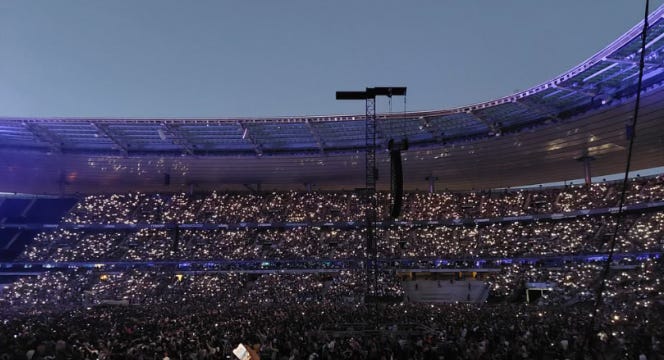
There is a reason empires always arrive with orchestras. Before the soldiers. Before the mining contracts. Before the development summits and democracy forums. Before the consultants explaining “regional stability” on television. They arrive with music. Jazz. Rumba. Afrobeats. Cultural exchange. Smiles. Stadium lights. And somewhere in the background: uranium, cobalt, military bases, diplomatic influence, and the management of African emotions.
The brilliant documentary Soundtrack to a Coup d’État reminds us of something the modern world prefers to forget: culture is never innocent inside empire. During the Cold War, the United States sent jazz legends like Louis Armstrong, Dizzy Gillespie and Duke Ellington across the globe as “Jazz Ambassadors.” Officially, they represented freedom. Unofficially, they represented American strategic interests. Armstrong arrived in the Congo precisely as the country entered the furnace of decolonization, secession, mercenary wars, uranium politics, and the assassination machinery surrounding Patrice Lumumba. While Katanga was being carved away under Belgian and Western interests, while intelligence agencies and mining companies circled the newborn nation like vultures around fresh meat, jazz floated elegantly above the chaos. That was the genius of empire. Bomb softly. Swing beautifully. The soundtrack distracts from the coup.
And six decades later, the choreography has simply modernized. Today the orchestra is no longer jazz. It is Congolese rumba, Afropop, ndombolo, streaming numbers, viral clips, sold-out arenas, and glittering nights at Stade de France. The instruments changed. The logic did not. When African megastars fill French stadiums every weekend, we are told this is merely “culture.” But geopolitics has always hidden itself behind words that sound harmless. Civilization. Development. Partnership. Cooperation. Culture. Meanwhile, France is simultaneously struggling to maintain its collapsing influence across large parts of Africa. Anti-French sentiment has exploded from the Sahel to Central Africa. French troops are pushed out. French diplomacy is increasingly distrusted. “Françafrique” is no longer whispered; it is shouted in the streets.
So what remains when the soldier becomes unwelcome? The artist. Soft power enters where hard power no longer can. This is why the discussion around Fally Ipupa cannot simply be reduced to entertainment. Nobody denies his talent. Artistically, he is immense.
That is not the issue. The issue is function. What role does music play inside systems of power? Because France does not merely host African music out of humanitarian love for African culture. If that were true, African asylum seekers would not be chased through administrative labyrinths while African stars are celebrated under stadium lights. The contradiction is revealing. The refugee is a problem. The entertainer is an asset. One African is deported at dawn. Another is projected on giant LED screens before 80,000 screaming fans. Both reveal policy.
And yes, there is something profoundly political about which cultures Western powers choose to platform, finance, normalize, or celebrate. We are constantly told culture transcends politics. Strange. Then why do we not see North Korean pop spectacles celebrated in Paris? Why are Iranian state-adjacent musicians not transformed into symbols of cosmopolitan openness? Why are Russian artists now scrutinized through geopolitical filters? Because everyone already understands culture is political when the empire decides it is. Africa alone is asked to pretend otherwise.
Under Emmanuel Macron, France attempted to reinvent its African strategy after the visible erosion of French legitimacy on the continent. The 2021 Africa-France Summit in Montpellier — heavily influenced by intellectuals such as Achille Mbembe — sought to bypass traditional African political elites and reconnect through youth, culture, memory, entrepreneurship, and symbolic dialogue. In simpler terms: if politics becomes unpopular, aestheticize politics. Turn geopolitics into vibes. And music becomes one of the safest entry points. It creates emotional proximity without requiring structural accountability. A concert is easier than explaining military partnerships. A viral dance challenge is easier than discussing uranium concessions or CFA franc debates. This is not unique to France. Every empire does this. America had jazz diplomacy. France has cultural diplomacy through Francophone celebrity ecosystems. The Gulf monarchies buy football clubs and sponsor global entertainment spectacles. China builds Confucius Institutes. Soft power is simply geopolitics wearing sneakers.
But the Congolese case goes even deeper because music in Congo has not merely accompanied politics. It has often replaced it. The phenomenon sometimes described as “Wenge-ization” of politics — named after the legendary Congolese group “Boys Band” like called Wenge Musica — transformed public life into permanent spectacle. Political leaders behave like orchestra chiefs. Parties split like rival bands. Meetings resemble concerts. Ideology disappears beneath slogans, choreography, charisma, and personality cults. The citizen slowly becomes a fan. The opposition becomes entertainment rivalry. Politics becomes ndombolo rythms with security forces. This is not accidental. It is structurally useful. A population permanently hypnotized by spectacle is easier to govern than a politically organized one. A diaspora busy fighting over musicians online is less likely to organize around mineral exploitation, foreign intervention, debt structures, or governance failures. The Roman Empire understood this long ago: bread and circuses. Modern empires simply upgraded the speakers.
That is why one repeatedly sees certain musicians orbiting around authoritarian power structures across Africa. Elections. Fifth mandates. Constitutional manipulations. Presidential courts. State ceremonies. Regimes seeking legitimacy through celebrity proximity. Music becomes deodorant for power. And yet this critique is uncomfortable because people genuinely love these artists. They are talented. They carry memories, language, identity, nostalgia, survival. For many Africans in Europe, concerts are emotional oxygen against exile, racism, precarity, and loneliness. That emotional truth is real. But emotional truth does not erase political function. Louis Armstrong himself was a complicated figure. A genius musician. A Black American navigating segregation at home while being sent abroad to advertise American freedom. One can admire the art while interrogating the machinery surrounding it. The same applies today.
To critique the geopolitical use of African music is not to attack African music itself. It is precisely because music matters that power invests in it so heavily. Empires do not finance irrelevance. And perhaps this is the deeper tragedy of the postcolonial condition: Africa’s greatest cultural energies are often mobilized not to sharpen political consciousness, but to anesthetize it. Not to organize citizens, but to pacify consumers. Not to challenge systems, but to soundtrack them. The dance floor becomes a waiting room for history. Meanwhile, the mines continue operating. The contracts continue being signed. The coups continue arriving. And somewhere, once again, the orchestra is already playing.
Notes: Fally Ipupa is not alone. Across Africa and the global South, a new generation of megastars now operates at the same level of mass cultural influence, soft power, and political-symbolic weight. In the Francophone and African sphere, Burna Boy has turned Afro-fusion into export diplomacy; Davido navigates elite political networks while commanding diaspora loyalty; Wizkid helped reposition Lagos as a global cultural capital; Aya Nakamura allows France to repackage its universalist branding through Afro-descendant visibility; Diamond Platnumz runs an East African entertainment empire with regional political proximity; Koffi Olomidé and Ferre Gola remain colossal references for Congolese identity politics; Youssou N’Dour crossed directly from musician to state actor; and Magic System embodies the “festive diplomacy” era of Francophone Africa. And if we extend the lens beyond Africa, the pattern becomes unmistakable: Taylor Swift now wields economic and political influence exceeding that of many institutions; BTS became an instrument of South Korean soft power; Bad Bunny reshapes Latin cultural identity with undertones of anti-colonial resistance; Drake and Beyoncé fuse culture, capitalism, and elite branding; and Blackpink functions as strategic national advertising. The key point is this: in the 21st century, mega-artists are no longer “just musicians.” They operate as parallel diplomats, emotional managers of populations, tourism campaigns, investment signals, and sometimes shields for states trying to soften their image. In the Cold War, it was jazz. Today, it is streaming platforms, stadium tours, diaspora nostalgia, viral dances, luxury branding, and algorithmic influence.
Thank you Rais. The evil chicanery of empire knows no bounds, deviously exploiting people's love of music. On the other hand, recall how the legendary artist Paul Robeson, who openly denounced racism and colonialism and called for brotherhood of all peoples, including (heaven forbid!) communists, who was beloved around the world, had his US passport taken away.....