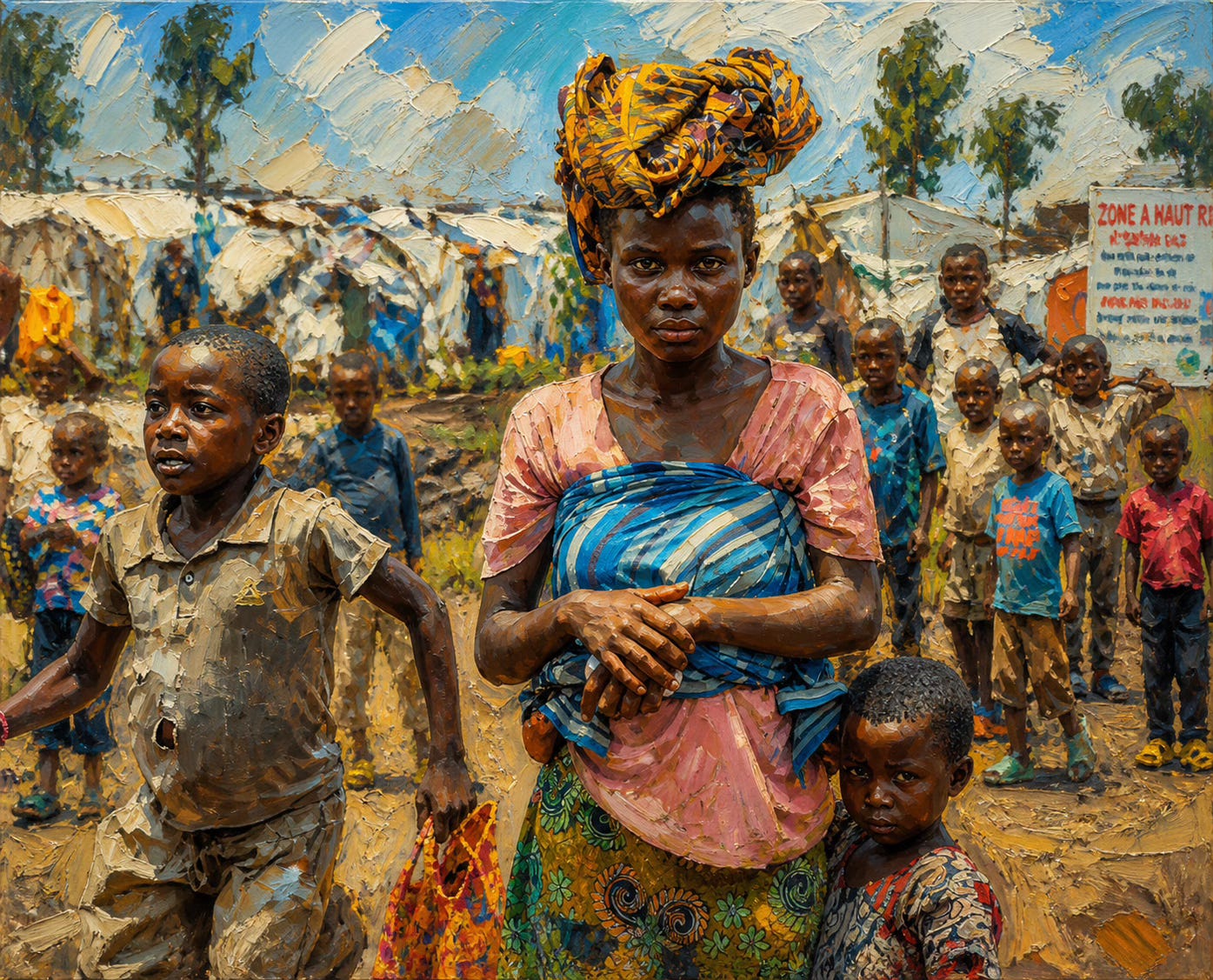
Sanctions for the Script: Minerals for the taking. No victory—only Congolese on the flight

So, the U.S. Treasury just slapped Joseph Kabila onto its blacklist, accusing him of “sowing instability” by bankrolling the M23. In Kinshasa, Tshisekedi’s court is uncorking the cheap champagne.
Victory at last! Washington has pointed a finger at the former president, the shadowy check-writer behind the rebels who, alongside Rwanda’s army, are carving up the Kivu like a Sunday roast.
There had to be a move. A strong move. A visible move. Something to reassure the moral shareholders of the world between two sustainability reports and a panel on “regional stability.” So Washington did what Washington does best: it sanctioned.
The former D.R.Congo President, Joseph Kabila is now blacklisted by the Office of Foreign Assets Control. His assets—rumored, mythical, possibly stored next to Atlantis—are frozen.
Meanwhile, of course, the folk in the Congo die. No victory, only Congolese on the flight—trudging down dirt roads with mattresses on their heads, while gravediggers work overtime. But never mind the corpses; let’s examine the sanctions.
They are a masterpiece of symbolic theatre. Kabila, the Treasury’s statement hints, isn’t the creator of the M23, merely its financial concierge. And since the old man almost certainly keeps his loot anywhere but a Manhattan bank account, the asset freeze is a lovely piece of political fiction. This isn’t punishment; it’s a signal—a velvet-roped warning shot.
But a warning for what? Here’s the noir-ish punchline. Washington didn’t dust off the sanctions machine because Rwanda violated Congo’s territorial integrity, or because its proxy militia has been filleting coltan and gold for years. That’s just the background noise. The causa belli, the true affront, was that the M23 and their Rwandan handlers captured the strategic town of Uvira a few days after the signing of a peace deal personally midwifed by President Trump. They made the man look incompetent. So, the Treasury reached for its favourite weapon—a public wrist-slap—and delivered a stiffly worded memo to the naughty step.
The sanctions on Kigali remain artfully limited. Sensitive cooperation? Untouched. The bottomless strategic partnership with Rwanda? Still breathing steadily. Washington’s real message, buried deep in the Treasury communiqué, is to all parties: stay in your lanes, freeze the frontlines, and above all, safeguard the real prize. And what is that prize? I quote: “an economic integration framework to develop trade and investment, strengthen transparency in critical mineral supply chains, and pave the way for greater investment in the region.”
Read that again, slowly. The goal is not to settle the war’s root causes, nor to return the occupied territories to Kinshasa’s authority. The goal is an orderly mineral bazaar, with supply chains scrubbed clean just enough for American companies to participate without embarrassing headlines. The M23 gets to keep what it stole; Rwanda continues to run the territories as a parallel administration; and Tshisekedi receives enough symbolic high-fives to keep him hopping on command. It’s a status quo wrapped in a peace accord, perfumed with the scent of lithium and cobalt.
Tshisekedi celebrates because his enemies are named-and-shamed. But the champagne will go flat when he realises that Uvira is still not his, that the rebels and their patrons are still digging in, and that Washington’s concept of “restraint” means everyone freezes exactly where they stood before Trump’s signature got cheapened. The Congolese state doesn’t regain its sovereignty; it simply isn’t allowed to lose any more ground this quarter.
So here we are: a dead-eyed diplomatic ritual in which the only real sanctions are reserved for those who embarrass the great power’s ceremonial calendar. The American eagle isn’t swooping down to save the Congo; it’s simply guarding a supply-chain flowchart, occasionally pecking someone who disrupts the workflow.
And the people? They continue to die and flee—the eternal backdrop to a negotiation where the minerals get a security guarantee and the humans get a footnote. It’s not a peace process. It’s a procurement policy with a rising body count. No victory, only Congolese on the flight. Pass the champagne.